


Setting up a home gym in Australia is more achievable than most people think. You don't need a dedicated room or a commercial budget — a 3.75 sq m corner of your garage, the right flooring, and a few well-chosen pieces of equipment is enough to build a space you'll actually use.
According to Garage Gym Reviews (2024), 61% of fitness enthusiasts surveyed maintain a dedicated home workout space — versus just 31% who rely on a commercial gym membership. The question isn't whether a home gym works — it's how to set one up without wasting money on the wrong things.
As an Exercise Science graduate and former elite swimmer, I've been helping clients build home gyms for over 20 years. I've seen the same mistakes made again and again: too much equipment, not enough floor, no plan. This guide walks you through every step.
Key Takeaways
- A functional home gym starts from around $500 AUD — a mid-range setup ($3,500–$5,000) breaks even against gym membership costs within 4–5 years (Canstar Blue, 2024).
- Minimum space needed is 3.75 sq m (2.5m × 1.5m); ideal is 15–20 sq m for mixed cardio and strength.
- Rubber flooring is non-negotiable — it significantly reduces impact noise (up to 38 dB for high-density 15mm+ tiles), protects your floor, and prevents injury.
- Overexertion is the leading cause of gym injuries, accounting for around 36% of cases — equipment anchoring and safety setup matter as much as the gear itself (GymMaster, 2024).
- Choose equipment based on your goals first, space second, budget third — in that order.
Table of Contents
- What Should You Plan Before Setting Up a Home Gym?
- How Much Space Does a Home Gym Actually Need?
- What Equipment Should You Start With?
- Do You Need Gym Flooring?
- How Much Does a Home Gym Cost in Australia?
- How to Lay Out Your Home Gym for Best Results
- The Safety Setup Most People Skip
- What Are the Most Common Home Gym Setup Mistakes?
- Frequently Asked Questions
What Should You Plan Before Setting Up a Home Gym?
Key insight: Research by Garage Gym Reviews (2024) found that 61% of fitness enthusiasts maintain a dedicated home workout space — yet poor planning remains the leading cause of underused equipment. Defining your training goal and budget before purchase is the single step most likely to determine whether your home gym succeeds or stagnates.
The biggest mistake I see clients make is buying equipment before they've answered two questions: what do I actually want to achieve, and how much can I spend? Goal and budget shape every other decision. A client who wants to lose weight needs different equipment from someone training for a powerlifting meet; their space requirements are completely different too.
Start here:
- What is your primary training goal? Weight loss, muscle building, general fitness, rehab, or a mix? Your answer determines whether cardio or strength equipment comes first.
- Who will use the gym? Just you, or the whole family? Multiple users with different goals changes both space needs and equipment choices.
- How will you use the space? Daily 30-minute sessions look different from an occasional weekend workout. High frequency demands more durable equipment.
- What is your non-negotiable budget? Set a number for your first purchase. You can always add more later. I recommend starting with one or two key pieces and building from there.
Once you've answered these, you're ready to look at the space.
How Much Space Does a Home Gym Actually Need?
The minimum space for a functional home gym is 3.75 sq m — roughly 2.5m × 1.5m — enough for a mat, dumbbells, and bodyweight work. An ideal mixed cardio-and-strength setup needs 15–20 sq m. According to Spacer.com.au (2020), individual cardio machines require 2–3 sq m each, and that's before you add clearance for safe movement around the equipment.
Don't just measure the footprint of your gear. Allow at least 0.5–1 m of clearance on all sides of any moving machine: treadmill belts, rowing slides, and bench press bars all need space that isn't in the product dimensions.
Ceiling height matters too. You need a minimum of 2.4 m for a treadmill (standing posture with natural head movement). Overhead pressing (barbell or dumbbell) requires at least 2.7 m. I've had clients discover this the hard way after buying a squat rack for a low-ceiling garage. Measure twice.
Equipment footprint + clearance — quick reference:
| Equipment | Floor Space Needed | Min. Ceiling Height |
|---|---|---|
| Treadmill | 1.9m × 0.9m + 1m rear clearance | 2.4m |
| Power rack / squat rack | 1.5m × 2.0m + 1m each side | 2.7m |
| Barbell + plates | 2.5m × 1.5m | 2.4m |
| Rowing machine | 2.5m × 0.6m (fold for storage) | 2.0m |
| Exercise bike | 1.2m × 0.6m | Any |
| Adjustable dumbbells + bench | 1.5m × 2.0m | 2.0m |
| Kettlebell / floor work | 3.0m × 3.0m | 2.4m |
Add 0.5–1m clearance beyond each footprint for safe access on all sides.
The garage option. A single-car garage in Australia averages around 16–18 sq m — enough for a solid mixed setup. A double garage gives you commercial-style space. A spare bedroom (typically 10–12 sq m) works well for cardio-focused or strength-only setups.
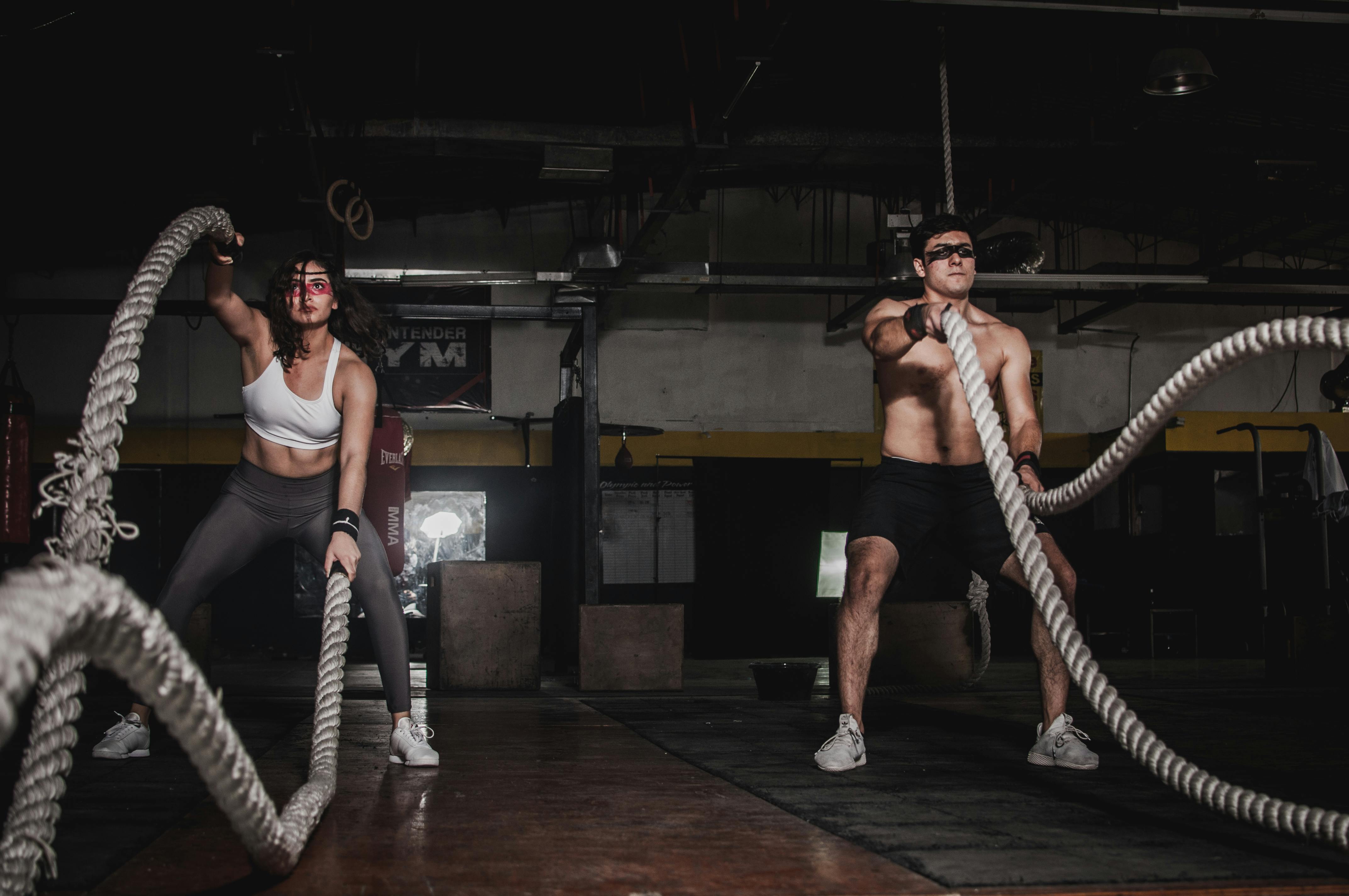 Photo: Pexels — search "home gym garage setup"
For more on treadmill dimensions and motor specs, see how to choose a treadmill in Australia.
What Equipment Should You Start With?
Key insight: For a home gym under 6 sq m, adjustable dumbbells, a resistance band set, a pull-up bar, and a quality mat deliver full-body strength and conditioning without a single cardio machine. For fat loss, a treadmill or rowing machine is the highest-return single purchase — with rowing machines burning the most calories per minute of any home cardio option.
The right first purchase depends entirely on your goal. Start with one piece of equipment that directly serves that goal, not the most impressive-looking machine and not the one on sale. In my experience, the clients who start focused almost always end up with better setups than those who buy everything at once.
My approach with clients: I always ask one question before recommending any equipment — "What would you do if this machine broke tomorrow?" If the answer is "nothing," that equipment is not their primary training tool. Buy what you'll actually miss.
For Cardio and Weight Loss
A treadmill or exercise bike is the most versatile starting point for fat loss. Both deliver sustained aerobic work, and both can be used at any fitness level.
- Treadmill — best for walkers, joggers, and runners. Look for a minimum 2.0 CHP continuous duty motor for walking; 2.5–3.0 CHP for jogging; 3.0+ for regular running. See our full treadmill range.
- Exercise bike — lower impact than a treadmill, ideal for anyone with knee or hip concerns. Upright bikes suit cardio intervals; recumbent bikes suit longer, gentler sessions. Browse exercise bikes.
- Rowing machine — the highest calorie-burn-per-minute option for home cardio, and it builds upper body and core strength simultaneously. Shop rowing machines.
- Elliptical / cross trainer — the most joint-friendly full-body cardio option; excellent for clients coming back from injury. See the cross trainer buying guide.
Not sure which to pick first? Treadmill vs exercise bike — which burns more fat? breaks down the comparison in detail.
For Strength and Muscle Building
Start with adjustable dumbbells and a weight bench. These two pieces cover more than 80% of strength exercises and take up the least space. From there, a squat rack or power rack opens up barbell work. Browse our weight bench range.
- Adjustable dumbbells — one pair replaces a full dumbbell rack; indispensable for a small space. Shop dumbbells.
- Adjustable bench + barbell — the foundation of any serious strength setup.
- Squat rack or power rack — required for heavy squats and bench press; safety spotters are essential for solo training. Explore squat racks and power racks.
For a Small Space (Under 6 sq m)
Resistance bands, adjustable dumbbells, a pull-up bar, and a quality mat. You can build real strength with this setup — I've seen clients make consistent progress for 18 months without adding a single piece of machine equipment.
 Photo: Pexels — search "woman dumbbells home gym"
For a detailed comparison of home cardio options, see treadmill vs rowing machine — which is better for home use?
Do You Need Gym Flooring?
Yes — and this is the step most people skip to save money, then regret. Good gym flooring does three things: protects your floor from equipment damage, protects you from slipping, and reduces noise. That last point matters more than you'd think.
GrytFit (2024) found that rubber gym flooring significantly reduces impact noise — high-density tiles at 15mm+ can reduce impact by up to 38 dB. Dropping a 20 kg dumbbell on bare concrete produces around 80 dB — that's the threshold where sustained exposure begins to affect hearing, and it travels through a timber floor to the room below.
Something most guides don't tell you: the issue isn't just noise — it's vibration. Concrete floors transmit vibration through wall footings. In a two-storey home, a treadmill on bare concrete can cause plasterwork to crack in the room below after 12–18 months of heavy use. A 15 mm rubber mat prevents this. I've seen it happen.
Flooring by surface type:
- Concrete garage floor — minimum 10 mm rubber tiles or rolls. Rubber absorbs impact, insulates against cold, and protects equipment feet from abrasion.
- Timber or floating floor (spare room) — 15 mm rubber tiles minimum; 20 mm for anything with a dropped weight risk (barbells, kettlebells). Do not use foam tiles under heavy equipment.
- Carpet — put rubber tiles directly over carpet for cardio machines. Never use bare equipment feet on carpet; the fibres trap heat in motor housings.
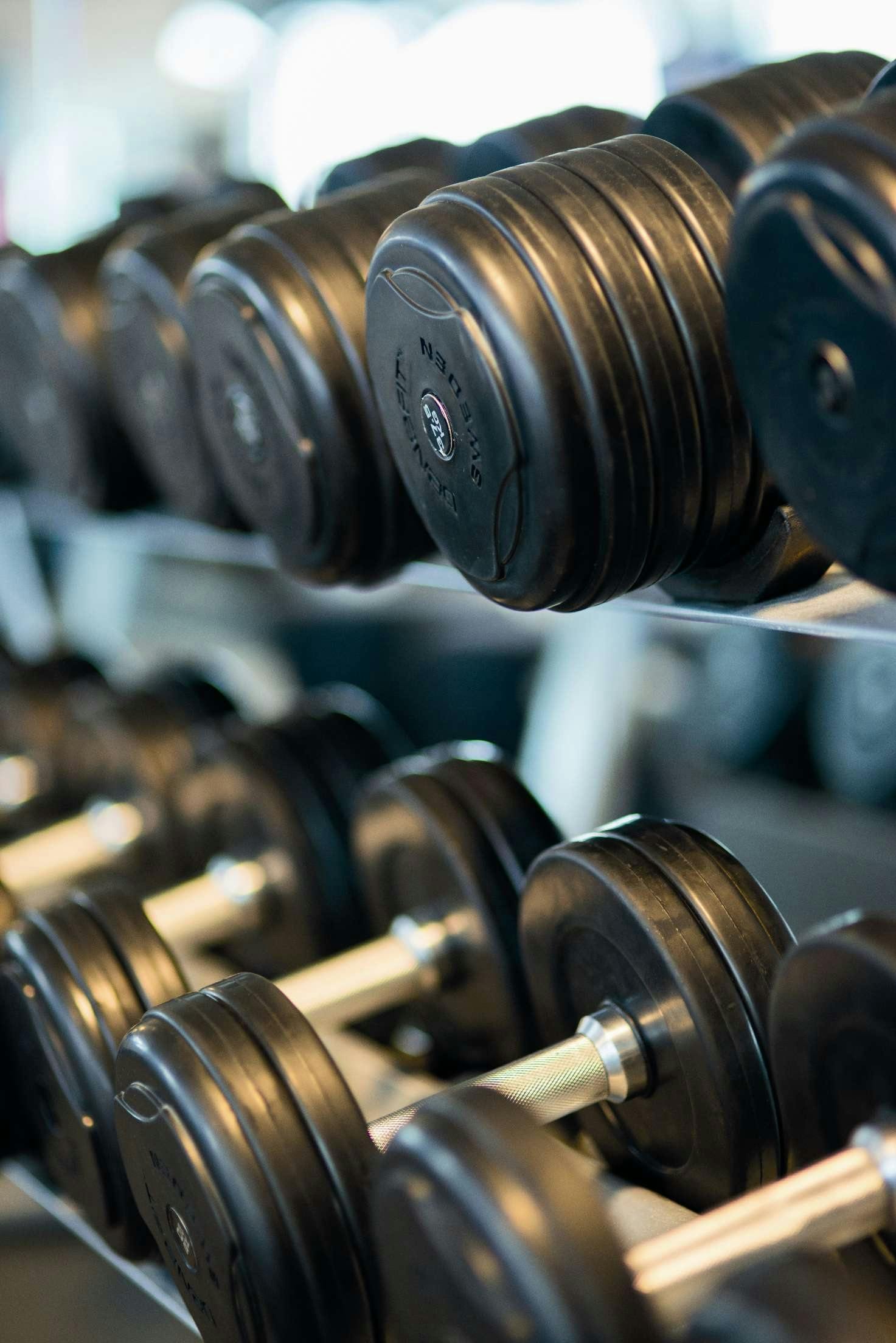 Photo: Pexels — search "rubber gym flooring mat"
A full rubber tile floor for a standard 3×4 m space costs around $150–$400 depending on thickness. This is not an area to economise on: cheap foam tiles compress under heavy equipment within months.
Related: treadmill cushioning and joint health — why the surface under your treadmill matters as much as the belt above it.
How Much Does a Home Gym Cost in Australia?
A functional home gym in Australia costs from around $500 for a cardio-focused starter setup to $15,000+ for a commercial-grade space. The sweet spot for most people — a mixed cardio and strength setup with quality equipment — sits between $3,500 and $5,000.
At the current average gym membership cost of $77/month (Canstar, 2026) — that's $924/year — a mid-range home gym pays for itself within 4–5 years and costs nothing beyond maintenance after that.
Cost tiers at a glance:
| Tier | Approx. Cost | What You Get |
|---|---|---|
| Starter | $500–$1,500 | Dumbbells, resistance bands, mat, pull-up bar |
| Mid-range | $3,500–$5,000 | 1 cardio machine + bench + dumbbells + flooring |
| Premium | $6,000–$15,000 | Full cardio + strength setup, squat rack, cable machine |
| Commercial | $15,000+ | Commercial-grade equipment, full gym station |
Source: Verve Fitness Australia / World Fitness Australia, 2025
Note that Cardio Online's 100-day home trial means you can try a major piece of equipment at home before committing — no restocking fee, no hassle. Browse our full home gym range.
How to Lay Out Your Home Gym for Best Results
Key insight: A single-car Australian garage (16–18 sq m) provides enough space for a treadmill, weight bench, dumbbell rack, and floor mat area — provided cardio machines are placed against walls, free weights occupy the centre, and ventilation is addressed before equipment layout. Poor ventilation is the primary reason Australian home gyms are abandoned during summer months.
Good layout is about safety and workflow, not aesthetics. The basic rule: arrange equipment so you can move between pieces without stepping over anything. Cardio machines go near a power outlet and ventilation source.
Free weights and benches go in the centre where you can move around them freely. Store weights close to where they're used; a barbell left on the floor is the most common trip hazard in a home gym.
Layout principles:
- Heaviest and largest equipment against walls — treadmills, racks, and rowing machines against a wall free up the centre for movement.
- 1 m minimum clearance at the rear of a treadmill and at least 0.5 m on each side — mandatory for safe emergency dismount.
- Mirrors on one wall (optional but useful) — a large mirror on the wall you face during training helps with form. Mount at eye height, not full-length, to avoid distortion.
- Storage off the floor — wall-mounted dumbbell racks and weight trees keep the floor clear. Anything on the floor is a hazard.
- Ventilation — plan this before anything else in the layout. Heat kills training consistency faster than any other factor, and Australian summers make this non-negotiable. Work through three options in order:
- (1) Natural ventilation — a window or roller door that opens creates adequate airflow for mild conditions at zero cost; orient your layout so the breeze crosses the space, not dead-ends into a wall.
- (2) Ceiling fan or pedestal fan — a $60–$150 pedestal fan or $200–$400 ceiling fan handles most garages in temperate climates and is worth installing before your first session.
- (3) Reverse-cycle split-system — the only solution that works through a Queensland summer, a west-facing garage, or year-round climate control; budget $1,500–$3,000 installed and treat it as equipment, not optional décor. A gym you can't train in during January is not a gym.
Once your layout is sorted and you're training consistently, HIIT workouts for home gym users are one of the most efficient ways to use the space you've built.
The Safety Setup Most People Skip
According to GymMaster (2024), 409,224 exercise equipment-related injuries were reported in 2021 — and overexertion is the leading cause, accounting for around 36% of cases, meaning lifting more than the body (or the equipment) was ready to handle. A home gym has no spotter, no gym staff, and no emergency system. That makes safety setup your responsibility.
In my 20 years of working with home gym clients, every serious injury I've heard about in a home setting had one thing in common: something wasn't secured. A barbell collar not clipped. A dumbbell left at the edge of a rack. A treadmill without the safety key attached. Small oversights with outsized consequences.
Non-negotiable safety checklist:
- Attach the treadmill safety key every single session — it clips to your clothing and stops the belt if you fall. It's there for a reason.
- Bolt your squat rack or power rack to the floor or wall — a rack under load that tips is a life-threatening incident, not a near-miss.
- Store all weights on racks or in designated spots — weights left on the floor are trip hazards; plates left on a barbell after a session stress the bar's centre over time.
- Never train to failure alone on a barbell — use a power rack with safety arms set at the right height, or use dumbbells for solo max-effort sets.
- Keep a first aid kit in the gym — a basic kit with ice packs and a compression bandage. You will need it eventually.
For more on safe loading technique with strength equipment, see preventing injuries on the leg press and strength machines.
What Are the Most Common Home Gym Setup Mistakes?
Key insight: The five most common home gym setup mistakes — buying too much equipment too soon, skipping rubber flooring, ignoring ceiling height, failing to plan ventilation, and purchasing based on appearance rather than training goals — share a single root cause: making purchase decisions before planning. Measuring space, setting a ceiling budget, and identifying your primary training goal before buying anything eliminates most of these errors.
Most of these come from rushing — buying equipment before measuring, measuring space but not ceiling height, or spending the budget on machines and having nothing left for flooring.
The five mistakes I see most often:
- Buying too much too soon. Start with one or two high-quality pieces. A $1,200 treadmill you use every day beats a $500 treadmill plus a rowing machine plus a cable station that all get used twice a month.
- Skipping flooring to save $200. Rubber flooring protects your floor, your equipment, and you. It's the last place to economise.
- Ignoring ceiling height. Measure before you buy any overhead equipment. This catches most people when they try to do shoulder press in a low-ceiling room.
- No ventilation plan. Heat is a training killer. A wall fan costs $60 and will keep you in the gym through Australian summers. A split-system is better. No airflow means the gym gets used only in winter.
- Buying based on what looks impressive. I've had clients buy a full Smith machine and a lat pulldown and then admit they only ever use the treadmill. Your ego will push you toward impressive equipment; your goals should win.
Still deciding between cardio machines? Exercise bike vs rowing machine and how much cardio you actually need per week are both worth reading before you buy.
Frequently Asked Questions
How much does it cost to set up a home gym in Australia?
A basic starter home gym costs $500–$1,500 AUD for resistance bands, dumbbells, and a mat. A mid-range setup with one cardio machine, a bench, dumbbells, and flooring runs $3,500–$5,000. A premium setup with full cardio and strength equipment costs $6,000–$15,000. At average gym membership fees of $77/month (Canstar, 2026), a mid-range home gym pays for itself within 4–5 years.
What is the minimum space needed for a home gym?
The minimum functional space is 3.75 sq m (2.5m × 1.5m) — enough for a mat and dumbbells. A single cardio machine needs at least 5–6 sq m including clearance. For a mixed cardio and strength setup, a minimum of 12–15 sq m gives you comfortable working space. A standard single-car garage (16–18 sq m) handles most setups comfortably (Spacer.com.au, 2020).
Do I need rubber flooring in my home gym?
Yes. Rubber flooring significantly reduces impact noise — up to 38 dB for high-density 15mm+ tiles — protects your floor from equipment damage, and prevents slips (GrytFit, 2024). For cardio machines on timber floors, minimum 15 mm rubber tiles. For heavy weights and barbells, use 20 mm. Foam tiles are not suitable under heavy equipment — they compress and degrade within months. Expect to spend $150–$400 for a standard 3×4 m space. You'll also find mats, cable anchors, and storage accessories in our gym accessories range.
What equipment should a beginner home gym start with?
Start with one piece that directly serves your primary goal. For weight loss or cardio fitness: a treadmill, exercise bike, or rowing machine. For strength and muscle building: adjustable dumbbells, a weight bench, and a set of resistance bands. Don't buy everything at once — add equipment as you know what you'll actually use. Browse all cardio equipment.
Is a home gym worth it compared to a gym membership?
Yes, for most consistent exercisers. At $77/month ($924/year), an Australian gym membership costs more than $9,000 over 10 years. A mid-range home gym costs $3,500–$5,000 upfront and lasts 10–15 years with basic maintenance. Only 1 in 5 Australian adults currently meets national physical activity guidelines (ABS, 2022) — removing the travel and access barriers of a commercial gym is one of the most effective ways to change that. Garage Gym Reviews (2024) found that 61% of fitness enthusiasts have a dedicated home workout space, compared to just 31% who rely on a commercial gym membership.
Ready to Build Your Home Gym?
Setting up a home gym takes planning, but it's not complicated. Define your goals, measure your space, choose your flooring, pick the right equipment for your needs, and set it up safely. That's the whole process.
If you're not sure where to start, the how to choose a home gym guide covers equipment selection in more detail. Or browse our home gym collection and full cardio range — and remember, every piece of equipment at Cardio Online comes with a 100-day home trial. If it doesn't suit you, send it back. No restocking fee. You can also read why thousands of Australians choose Cardio Online before you decide.
Further reading: How to choose a home gym · Best exercise bikes in Australia · Best rowing machines in Australia


